
Digital roundwood records
Stay in control of every cubic metre. And of its value.
timbera links the tagging of timber in the field with digital records of its origin, dimensions and quality. From harvesting through to delivery to the customer you have an overview of the stock, movement and value of individual logs and whole shipments.
- Log-by-log roundwood records
- Running valuation
- Traceability of origin
Benefits
Reliable records show up in the result
Discrepancies in volume, unclear grading or timber that has been left at the landing unnoticed complicate trade and tie up money. timbera gives you a common basis for managing stock, checking shipments and negotiating with the customer.
Overview of stock
You know what timber you have at landings and yards, and what has already been dispatched.
Checks on shipments
When there are discrepancies in volume or quality, you go back to the records of the particular logs. You have the basis to compare your own records against the intake at the customer.
Value before dispatch
You decide on a sale with an overview of the quantity, quality and running valuation of the timber.
Traceable origin
Origin data stays assigned to the particular timber as it moves on.
Tagging
Every log has its number. Every detail has its place.
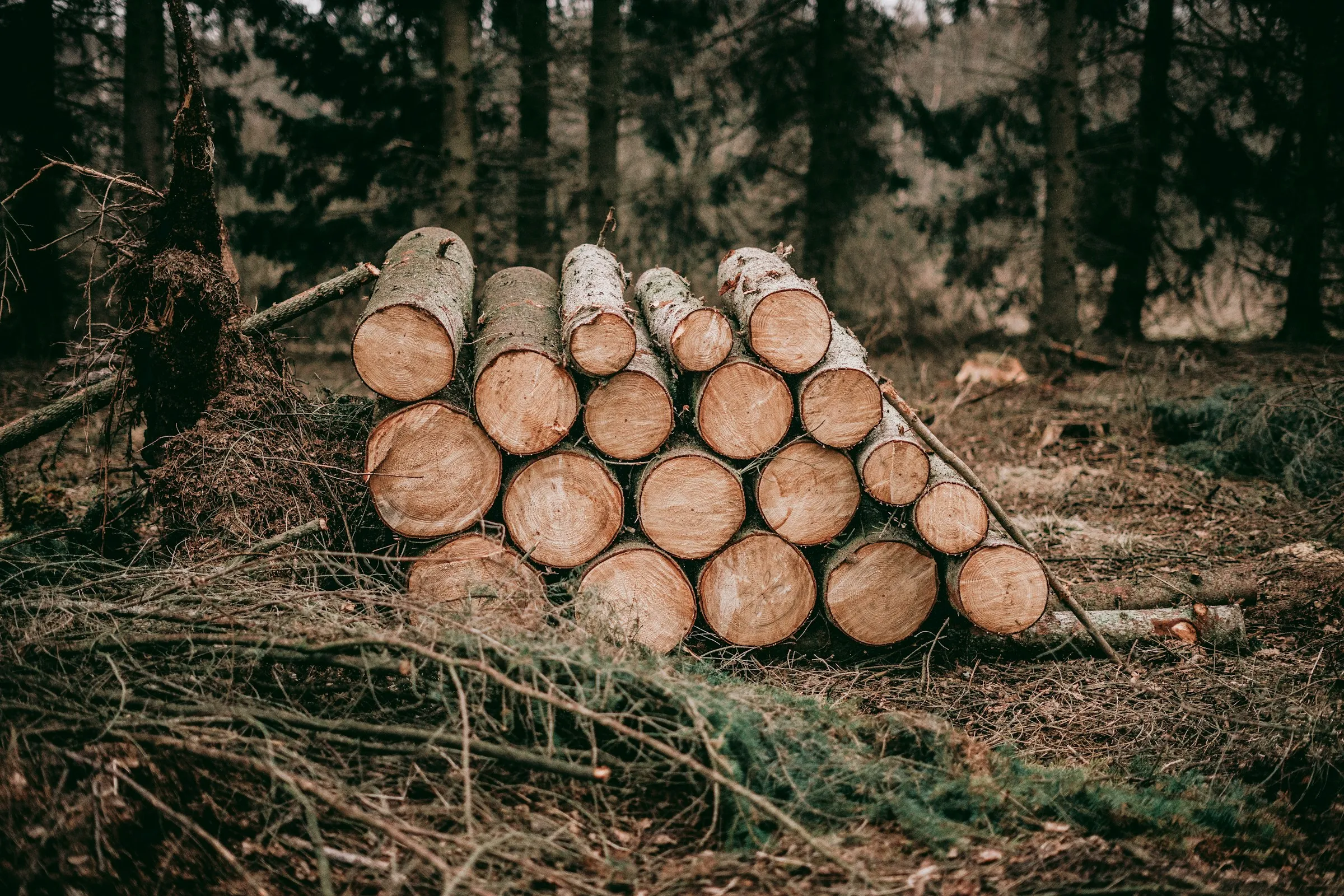
A physical tag carrying an identification number and a QR code links a particular piece of roundwood to its record in the application. Species, dimensions, quality grade and origin therefore belong to one specific log.
The numbering makes checking easier when timber is recorded and handed over. Scanning the QR code opens the corresponding record in the application.
The number is engraved on the tag. The tag can be removed before the timber is processed further.
How it works
From the field to the office. From harvesting to the customer.
You tag the timber
Every log entered into the records gets a tag with an identification number and a QR code.
You record the data on the spot
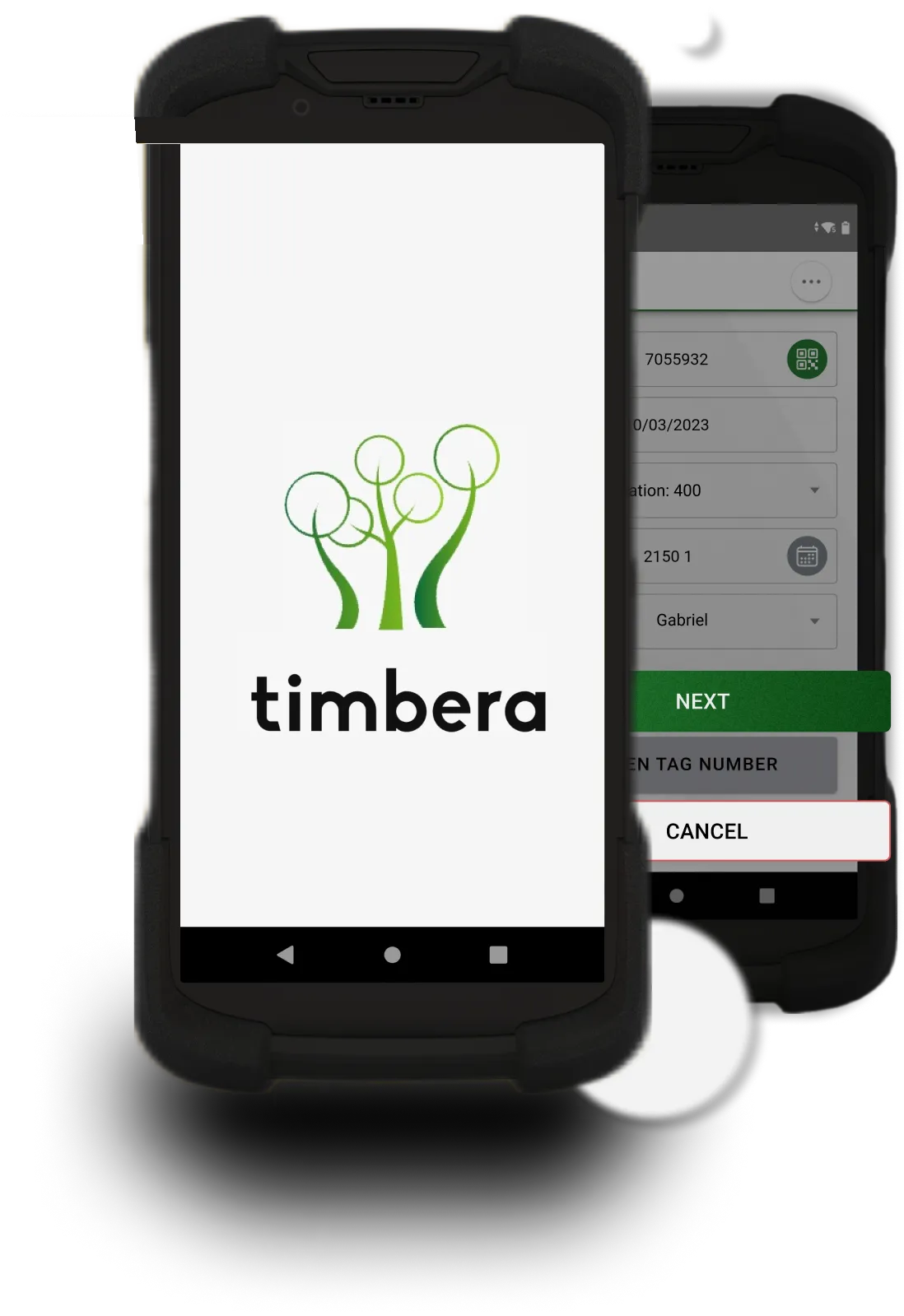
In the mobile application you scan the tag and enter the parameters of the timber. The data is created directly in the field, with no paper records to copy out afterwards.
You link the log to its origin
To the identification number you assign the species, dimensions, quality grade, origin and time data. The record is part of the central records.
You follow stock and dispatch
In the web application you follow the timber that has been recorded, the stock at landings and the shipments dispatched. The field and the office work with the same records.
- Mobile application for rugged Zebra devices running Android
- Web application for management and oversight
- Access according to user permissions
Valuation
Know what your timber is worth before you sell it
Volume and quality grade have a direct effect on the price. timbera combines timber records with a running valuation, so that you have the basis for a commercial decision while the shipment is still being prepared.
You see the value of a single log and of a whole shipment. In negotiations with the customer you work from recorded data about the timber you are actually selling.
EUDR
The origin of timber has to be traceable
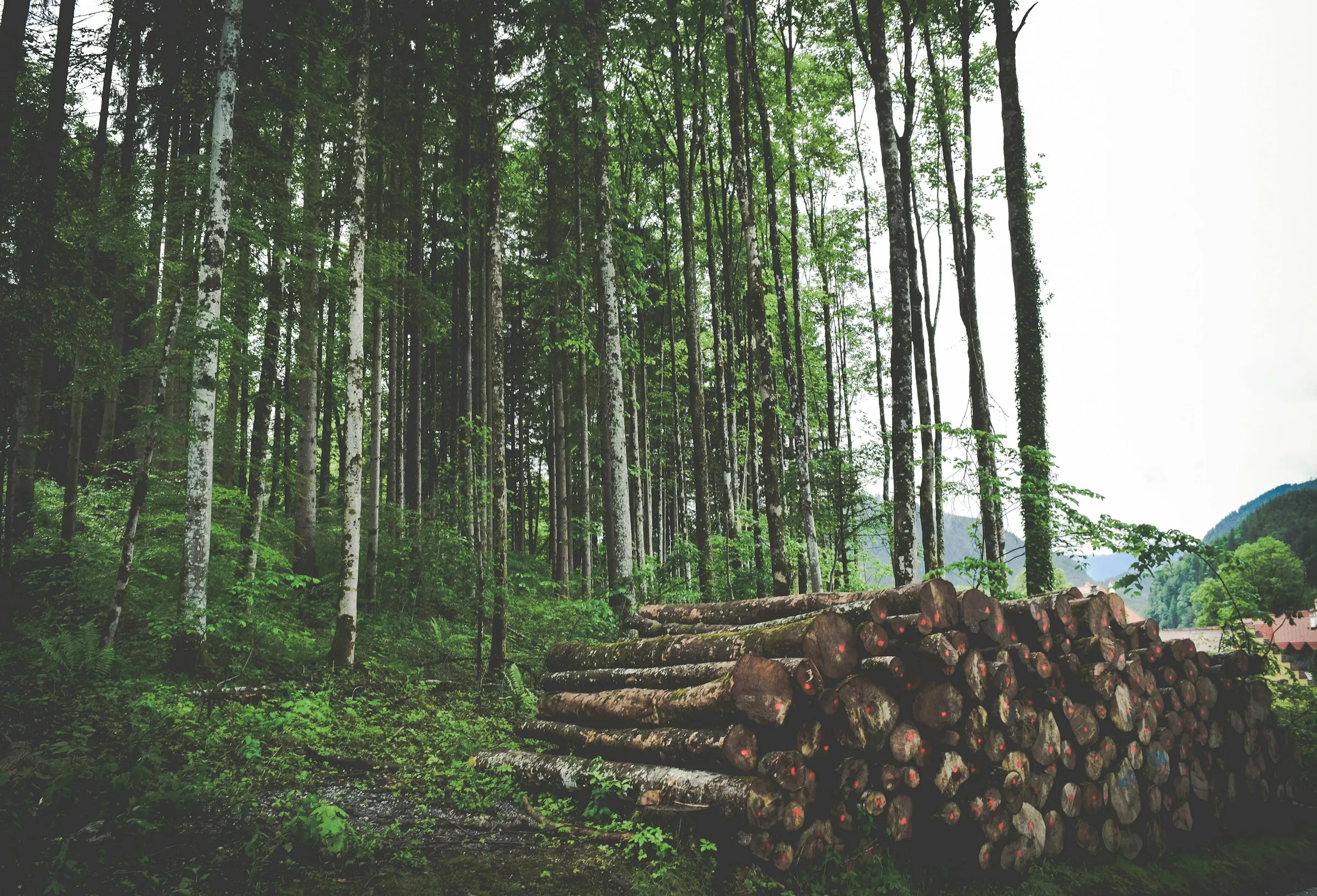
EUDR introduces requirements on the origin of timber, on its legal production and on ruling out any link to deforestation and forest degradation. The scope of the obligations depends on where the company stands in the supply chain.
timbera keeps records of the origin and movement of individual logs. It helps you build the basis for the traceability of timber and for preparing documentation under EUDR.
For large and medium-sized operators the rules start to apply on 30 December 2026. The same date applies to micro-enterprises and small operators for the products covered by the existing EU Timber Regulation, which include roundwood. For the remaining micro and small operators the date is 30 June 2027.
The records in timbera are the basis for meeting these obligations. Risk assessment, the relevant statements and responsibility for compliance remain with the obliged entity.
More about EUDR and the role of timbera
A note for whoever handles your compliance paperwork. Regulation (EU) 2023/1115, as amended by Regulation (EU) 2025/2650.
- Application
- Article 38(2): 30 December 2026. Article 38(3) defers application to 30 June 2027 for operators that are micro-enterprises or small enterprises established by 31 December 2024 — but only “except as regards the products covered by the Annex to Regulation (EU) No 995/2010”. Wood in the rough, that is roundwood, is in that Annex, so for roundwood there is no deferral.
- Who files the statement
- The due diligence statement is filed by the operator who first places the product on the EU market or who exports it. It is submitted through the EU Information System.
- Geolocation
- The statement includes the coordinates of every plot of land on which the wood was produced. Plots larger than four hectares require a polygon, not a single point.
- Cut-off date
- The land must not have been subject to deforestation after 31 December 2020.
- Records
- Supporting information and the statements have to be kept for five years.
- Sanctions
- Fines with a maximum of at least 4% of total annual turnover in the Union, confiscation of the products and of the revenue from them, and exclusion from public procurement.
The application dates in this regulation have been postponed before. Check your own obligations with your legal advisor.
About us
Developed out of practice in forest management
Behind timbera stands M&J Business, s. r. o. — a company with fifteen years of experience in managing forests and trading timber.
We work for landowner associations, municipalities, and private and institutional forest owners. We know what records are required during harvesting, haulage and the sale of timber. timbera grew out of that experience.
Our aim is that the data recorded in the field serves both the day-to-day running of the operation and commercial decisions.
Who it is for
For companies that need to manage both the timber and the trade
Forest managers
An overview of harvested timber, stock and its further movement. A basis for overseeing the management of forest property.
Logging contractors
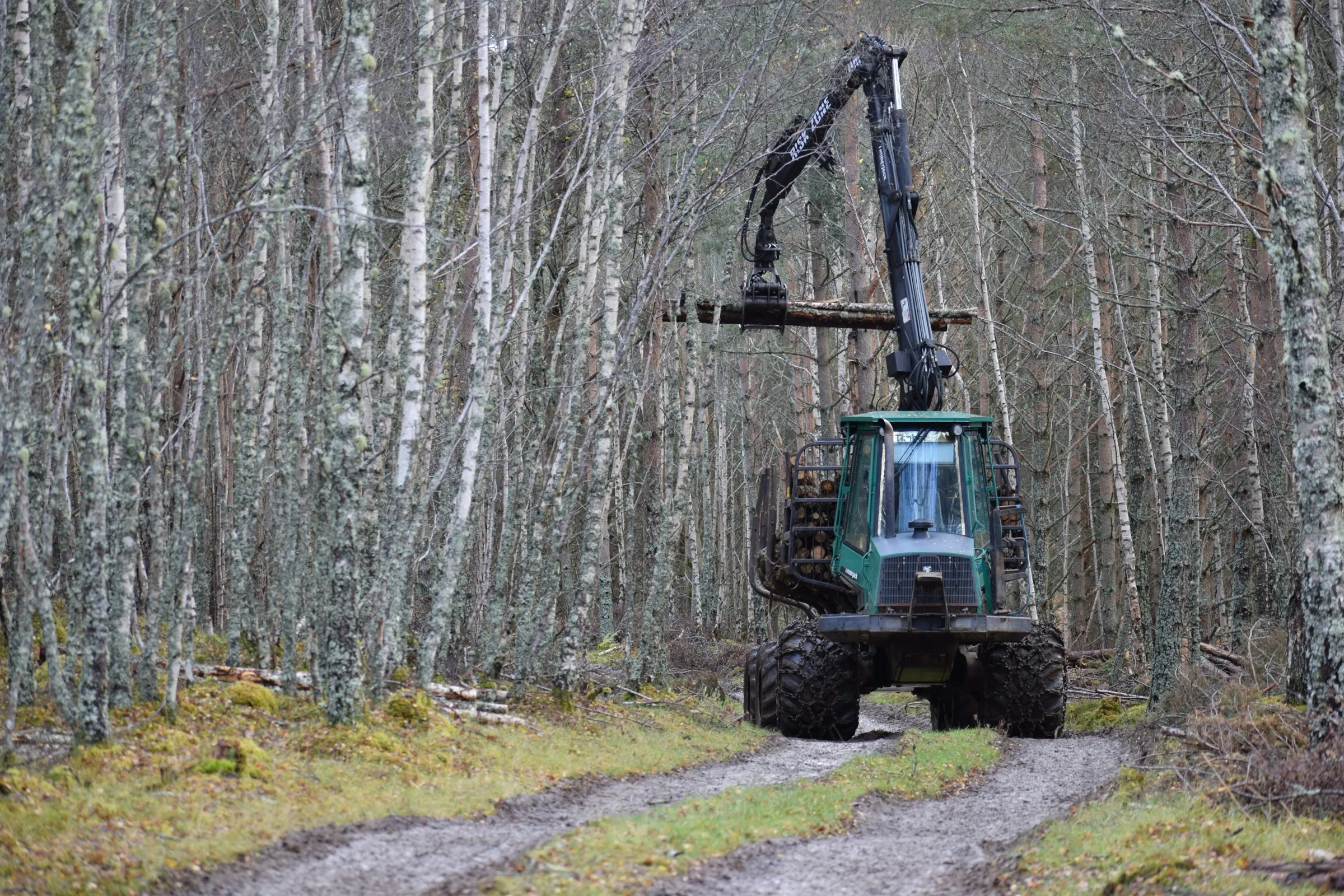
Log-by-log records directly in the field and traceable data when timber is handed over.
Timber traders
Data on the origin, quality and value of timber linked to particular shipments.
Sawmills and roundwood processors
A basis for checking incoming timber and tracing its origin.
Upcoming modules
Further tools for managing harvesting
- In development
timbera plan
Spatial planning of harvesting using GIS and GPS. Support for decisions on the order of work in stands and on skidding routes.
- In development
timbera finance
Assessment of the economics of harvesting: cost per m³, margins and the financial results of individual stands.
Contact
See timbera applied to your own operation
We will show you how roundwood tagging, stock records and timber valuation come together in a single operation.
Write to us with the annual volume of timber you work with and how you record it today. We will go through the steps of setting it up, the equipment needed and the price.
Your message is on its way.
We usually reply within one working day. You will find a confirmation in your e-mail.